“I’ll just do it myself, how hard can it be?”
If you have ever said that about your tax return, you are in very good company. Thousands of small business owners across Melbourne’s western suburbs lodge their own returns every year and the ATO is perfectly happy to let them. What the ATO is not going to do is ring you up to point out the deductions you missed, the depreciation schedule you forgot, or the extended deadline you never knew existed.
That is the job of a registered tax agent. And once Melbourne business owners discover what that actually means – legally, financially, and practically, very few go back to doing it themselves.
What Is a Registered Tax Agent — and Why Does the “Registered” Part Actually Matter?
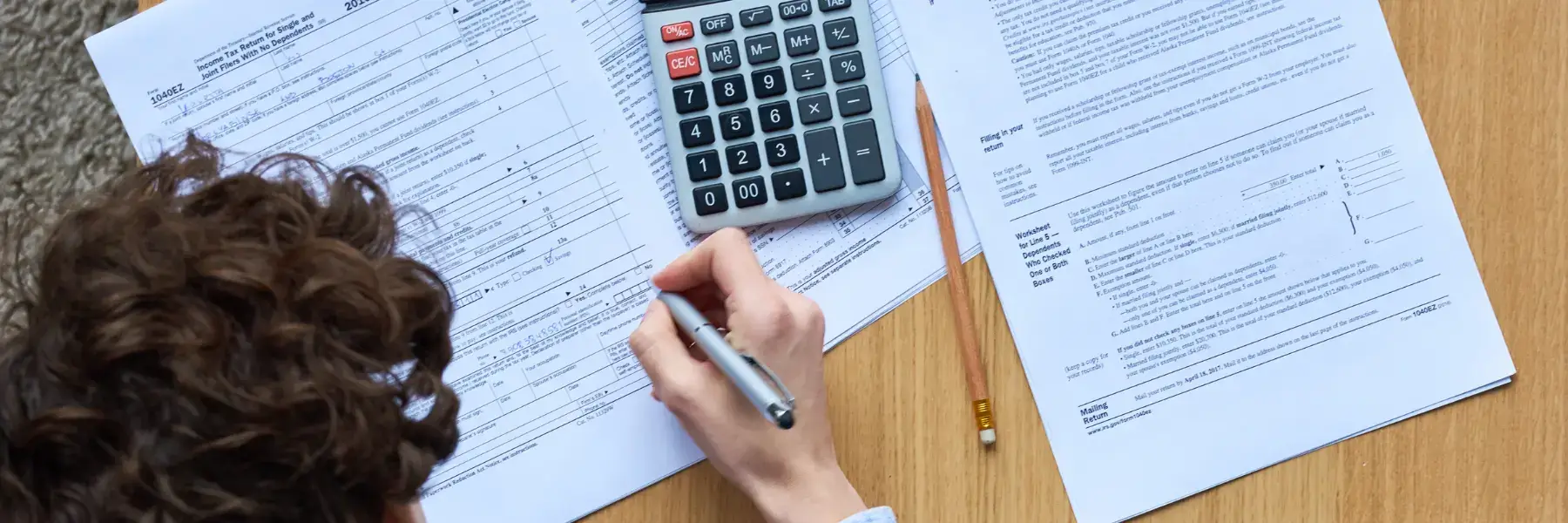
Not every accountant is a registered tax agent, and the distinction is more significant than most people realise.
A registered tax agent is a professional who is formally registered with the Tax Practitioners Board (TPB) — Australia’s statutory body responsible for regulating the tax profession. Registration means the agent has met minimum education and professional experience requirements, holds professional indemnity insurance, and is legally permitted to charge a fee for preparing and lodging tax returns on a client’s behalf.
Under the Tax Agent Services Act 2009 (Cth), providing tax agent services for a fee without TPB registration is actually illegal. So when you hire someone who is not registered, you have no consumer protection, no recourse if things go wrong, and potentially no valid lodgement.
When you engage a ATO registered tax agent, you are protected by the TPB’s Code of Professional Conduct, which includes obligations around:
- Honesty and integrity in all client dealings
- Independence and confidentiality of your financial information
- Competence — the agent must maintain their knowledge of current tax law
- Acting in your best interests, not just their own
You can verify any practitioner’s registration on the TPB’s public register before you commit.
Quick tip: An accountant can prepare your financial statements. Only a registered tax agent can legally charge you to lodge your tax return with the ATO. Some professionals hold both qualifications — always ask.
The EOFY Deadline Advantage Most Small Business Owners Never Hear About
This is the most undersold benefit of working with a registered tax agent, and it is worth every dollar on its own.
If you lodge your own tax return, the ATO requires individuals and sole traders to submit by 31 October each year. Miss it, and penalties apply — currently $330 per 28-day period, up to $1,650 for smaller entities.
But here is what changes the moment you become a client of a registered tax agent:
- You gain access to the registered agent lodgement programme
- This programme grants your agent an extended deadline — often as late as 15 May the following year
- To qualify, you generally need to be on your agent’s client list by 31 October
That is potentially an extra six and a half months to:
- Gather records for multiple income streams
- reconcile your invoicing and bookkeeping
- Plan your deductions strategically rather than rushing
- Respond to any ATO correspondence without panic
For a business owner juggling payroll, stock, staff, and customers, that breathing room is genuinely valuable. Think of it as a structural advantage that comes built into the relationship — no extra cost, no special request required.
At MaxMargin Accountants, our registered tax agents manage these extended lodgement windows for all eligible clients as a matter of course. Learn more about how we handle income tax returns for Melbourne small businesses.
When Does DIY Tax Actually Become a Liability?

myTax works perfectly well for simple situations — a salary, a HECS debt, maybe a few hundred dollars in bank interest. The moment your financial life gets more complex, the risk-reward calculation shifts dramatically.
You should seriously consider engaging a small business tax agent in Melbourne if any of the following apply to you:
- Multiple income streams — freelance work plus a salary, or two separate ABNs
- Investment property — depreciation schedules, borrowing cost apportionment, and negative gearing calculations are frequently misclaimed by self-lodgers
- ABN / sole trader income — business deductions, home office claims, motor vehicle usage, and the rules around what counts as a “business” versus a “hobby” all carry real complexity
- Crypto assets — the ATO has made digital assets a specific compliance focus; CGT events on crypto are commonly underdisclosed and underreported
- Goods and Services Tax (GST) — if your turnover exceeds $75,000, you are required to register for GST and lodge Business Activity Statements, which carry their own deadlines and reporting requirements
- ATO audit or review risk — if you have received a letter from the ATO, a tax agent can manage the entire correspondence process and represent your interests
- Trust or company structures — these carry separate lodgement obligations that simply cannot be handled through myTax at all
If two or more of these apply to you, DIY is not saving you money, it is almost certainly costing you money in missed deductions and exposing you to compliance risk.
Explore how we specifically support property investors and Uber and rideshare drivers across Melbourne, two groups with particularly complex tax profiles.
“But Isn’t It Cheaper to DIY?” — The Cost vs. Value Reality
This is the objection we hear most often, and it is completely understandable. Let us look at the actual numbers.
What DIY tax costs:
- myTax: free to lodge
- Third-party tax software (e.g., Etax, TaxAct): approximately $80–$150 per return
- Your time: typically 4–10 hours for a business owner with multiple income sources, deductions, and BAS obligations
- Missed deductions: this is the hidden cost — the ATO estimates that many self-lodgers leave hundreds to thousands of dollars in legitimate deductions unclaimed each year
What a registered tax agent costs:
- Fees vary based on complexity, but for a typical small business tax return in Melbourne, expect to pay somewhere in the range of $300–$900 depending on the scope of work
- More complex returns involving trusts, companies, or investment properties will sit higher
The key point most people miss:
Tax agent fees are fully tax deductible under Section 8-1 of the Income Tax Assessment Act 1997. That means if you are in the 32.5% marginal tax bracket, a $500 agent fee effectively costs you around $337 after the deduction. The deduction applies in the year you pay the fee.
When you factor in the deductibility of the fee, the extended lodgement deadline, the strategic advice, and the deductions a skilled agent identifies that you would not have found yourself, the return on investment becomes compelling very quickly. The Small Business Commissioner’s data confirms there were over 2.7 million active ABN holders in Australia in 2024–25 — and the competitive landscape they operate in makes accurate, strategic tax management more important than ever. (Source: ASBFEO / ABS Counts of Australian Businesses, August 2025)
For a deeper look at how proactive tax planning can improve your bottom line year-round — not just at EOFY — read our article on maximising your financial efficiency with expert accounting in Melbourne.
Local Market Context: What Melbourne’s Western Suburbs Tell Us
The growth corridors stretching from Williams Landing through to Werribee, Hoppers Crossing, and Point Cook have seen significant small business growth over the past several years, driven by population expansion and Victoria’s payroll tax reforms — including the threshold increase from $700,000 to $900,000 from 1 July 2024, with a further rise to $1,000,000 expected from July 2025.
That shift means many growing businesses in Melbourne’s west are reconsidering their tax strategy as their turnover and complexity increases. (Source: tnaccounting.com.au, October 2025)
Additionally, the ATO’s increased scrutiny on rental properties, work-from-home claims, and crypto assets — all themes in their recent compliance programmes — makes the western suburbs demographic (many of whom hold investment properties in their early-to-mid career stage) a particularly high-risk group for self-lodgement errors.
For new business owners just getting started, our 10 Tax Tips for New Business Owners guide is an excellent starting point before your first lodgement.
Why MaxMargin Accountants — and Why Now

MaxMargin Accountants has been serving Melbourne’s small business community since 2014. Based in Williams Landing, we are a short drive from Hoppers Crossing, Werribee, Point Cook, Tarneit, and Altona — and we work with clients across greater Melbourne including the CBD and eastern suburbs.
Our team includes CPA-qualified accountants and ATO-registered tax agents who specialise in working with sole traders, small businesses, property investors, and growing enterprises across a wide range of industries — from tradies and café owners to IT professionals and NDIS service providers.
Here is what you get when you work with us:
- A registered tax agent (TPB Registration Number: 24966984) legally authorised to lodge on your behalf
- Extended lodgement deadlines through the registered agent programme
- Proactive tax planning advice — not just return preparation
- A dedicated point of contact who knows your business, not a call centre
- Fixed, transparent fees discussed upfront — no surprises
- Over 400 five-star Google reviews from clients across Melbourne
Ready to make the switch?
Book your free initial consultation →
We serve clients across Williams Landing, Hoppers Crossing, Point Cook, Werribee, Tarneit, Altona, Laverton, and beyond. If you are searching for a registered tax agent near me in Melbourne’s west — you have found us.
Frequently Asked Questions
What is the difference between a tax agent and an accountant in Melbourne?
A registered tax agent holds TPB accreditation and can legally lodge tax returns for a fee. While many accountants are also registered tax agents, the two designations are not automatically interchangeable — always verify TPB registration.
How do I get an extended tax return deadline in Australia?
If you are on a registered tax agent’s client list by 31 October, you may qualify for an extended lodgement deadline of up to 15 May the following year, through the ATO’s registered agent lodgement programme.
Are tax agent fees tax deductible in Australia?
Yes. Fees paid to a registered tax agent for preparing and lodging your tax return are fully deductible under Section 8-1 of the Income Tax Assessment Act 1997, claimable in the year the fee is paid.