Most property investors in Victoria do not think much about land tax until the assessment turns up. You run the numbers before you buy, the rent coming in, the loan, the rates, the insurance, and land tax in Victoria sits somewhere between a footnote and an afterthought. Then the notice arrives, the figure is larger than you expected, and you are left wondering whether you got your sums wrong.
You probably did not. What changed is the rules. When Victoria cut the land tax threshold in 2024, thousands of ordinary owners across Melbourne were pulled into the net for the first time, and plenty are still catching up on what it means. This is the plain-English explainer we wish every investor had before their last property decision: how the tax works, and how it connects to your tax return.
One thing worth saying up front. Land tax is a state tax, run by the State Revenue Office of Victoria, so the thresholds, rates and exemptions here are nothing like the ones in New South Wales or Queensland, and a lot of the advice floating around online simply will not apply to you. As Williams Landing tax specialists at MaxMargin Accountants, sorting out that kind of Victoria-specific detail is our day job.
What land tax in Victoria actually is (and what triggers it)
Land tax is an annual tax on the total taxable value of all the land you own in Victoria, excluding your principal place of residence if you qualify for that exemption. A few features catch people out:
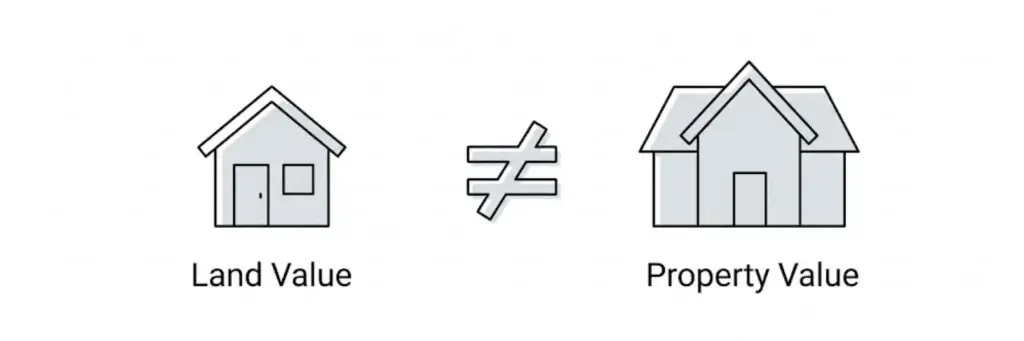
- It is based on land value, not property value. The State Revenue Office uses the site value of your land, which is the value of the land itself set by the Valuer-General, without the house or building on top. That is usually well below what you paid for the property.
- It is assessed once a year, on a fixed date. Your liability is worked out on the land you owned at midnight on 31 December of the preceding year. Buy in January and you generally will not be assessed on that property until the following year.
- All your Victorian land is added together. This is the big one. Land tax applies to the combined value of your holdings, not each property in isolation. One threshold covers your whole portfolio.
The general threshold is currently $50,000, the lowest of any Australian state. It was cut from $300,000 on 1 January 2024, which is precisely why so many ordinary investors who never used to pay are now receiving assessments.
The 2026 thresholds and rates
These are the general rates that apply for the 2026 assessment year.
- The tax-free and flat-fee zone. Nothing is payable below $50,000. From $50,000 to just under $100,000 you pay a flat $500. From $100,000 to just under $300,000 you pay a flat $975.
- The higher bands, where a percentage kicks in. From $300,000 the bill becomes a base amount plus a marginal rate. For example, holdings from $300,000 to under $600,000 pay $1,350 plus 0.3% of the value above $300,000. The scale keeps rising, reaching $31,650 plus 2.65% on the amount above $3 million for the largest holdings.
- The trust surcharge. Land held in a trust is taxed from a much lower threshold of $25,000, and a surcharge applies on top of the general rates, starting at 0.375% in the lower bands. Above $3 million the trust scale converges with the general one. This is where many investors get an unwelcome surprise, which we cover in more detail below.
A temporary COVID Debt levy is baked into these figures for the 2024 to 2033 period, which is part of why the low bands carry a fixed fee. Rates and thresholds can change, so always confirm the current numbers with the State Revenue Office or your accountant before relying on them. If you would like these figures applied to your own portfolio, our team offers property investor tax advice tailored to Victorian holdings.
Exemptions that actually matter for Melbourne investors
Not all land is taxable, and knowing the exemptions can meaningfully reduce your bill. The ones investors most often rely on are:
- Principal place of residence (PPR). Your family home is generally exempt, provided you meet the ownership and occupancy conditions. There are also provisions that can preserve the exemption for a period if you temporarily move out, so timing matters if you turn your home into a rental or move interstate.
- Primary production land. Land used for genuine farming can be exempt. It is less common in the suburbs, but it is worth checking for larger outer-Melbourne or semi-rural holdings around the urban fringe.
- Charitable and residential care uses. Land used by charities or for certain residential care purposes may qualify. These are narrower, but they exist.
Just as important is knowing what is not exempt, because this is where the misconceptions live. Holiday homes, standard investment properties and vacant land held for future development are all generally assessable. Vacant homes can attract an additional charge too: the Vacant Residential Land Tax, set at 1% of a property’s capital improved value, now applies across all of Victoria rather than just inner Melbourne. If you own across the western suburbs and want this checked against your specific titles, it is worth speaking to a source of local property tax advice who knows the Wyndham market.
The trust trap: why investors who hold property in a trust often pay more
Holding property through a discretionary trust is a popular move for asset protection and income splitting. The problem is that Victoria treats trusts far more harshly for land tax, and many investors only discover this after they have bought.
Two things drive the extra cost. First, the tax-free threshold for a trust is just $25,000, compared with $50,000 for an individual, so a trust starts paying sooner. Second, the trust surcharge sits on top of the general rates across the lower and middle bands. On a modest holding the difference might be small, but as land values climb the gap widens quickly, and across a growing portfolio it becomes a genuine annual cost.
There are nuances. Fixed and unit trusts can sometimes nominate a beneficiary and access the general rates, whereas discretionary (family) trusts generally cannot. The lesson is not that trusts are bad, because the asset protection and estate planning benefits can be significant. The lesson is that the land tax cost needs to be priced in before you buy, not discovered afterwards. This is exactly the sort of decision where advice pays for itself, and our tax tips for new business owners touch on the same principle: structure first, buy second.
How land tax affects your income tax return

Here is the part most people are really searching for. Land tax is not just a holding cost you absorb quietly; it has a direct connection to your income tax return.
Land tax paid on an investment property is generally deductible against the rental income from that property, in the income year you incur it. On your return it belongs on the rental schedule as an expense, listed among your other holding costs such as interest, insurance and council rates. It is treated as a revenue expense, not a capital cost, so it reduces your taxable rental income for the year rather than being added to your cost base for capital gains purposes.
A couple of situations need care. If you rented the property for only part of the year, or if part of your own home is rented out, the deduction is apportioned to the income-producing portion or period. Claim the whole amount when only part qualifies and you have an error waiting to be found. This is where a tax accountant in Melbourne earns their keep: correct classification, correct apportionment, and the right figure in the right box. Our explainer on how a Melbourne tax accountant maximises your refund walks through how these deductions add up across a return.
Common questions about land tax in Victoria
Do I pay land tax on my family home?
No. Your principal place of residence is generally exempt, provided you meet the ownership and occupancy requirements. The exemption applies to the home you actually live in, not to a second property or a holiday house.
If I own two properties in Victoria, is the threshold applied to each?
No. Land tax is assessed on the combined taxable value of all your Victorian land holdings, excluding your exempt principal place of residence. You get one threshold across the whole portfolio, not one per property.
Can I reduce my land tax bill?
You cannot negotiate the rate, but you can make sure your exemption claims are correctly lodged and that your land valuations are accurate. If you believe your site value is too high, you can object to the valuation, generally within two months of your assessment.
Is land tax deductible?
Yes. Land tax on an investment property is generally deductible against the rental income from that property. Your tax accountant will include it as an expense on your rental schedule.
Speak to someone who knows Victorian property tax
If you own investment property in Victoria and want to be certain your land tax is handled correctly on your tax return, it is worth a conversation. The team at MaxMargin can review your assessment, check your exemptions and make sure every deductible dollar lands in the right place. Book a chat with our tax accountant in Melbourne and go into your next property decision knowing the real numbers.