
Most sole traders do not lie awake worrying they have paid too little tax. They worry about the opposite: that they have paid too much, missed something obvious, or claimed one thing they were not meant to. If that is you at tax time, you are in good company.
Doing your own sole trader tax return is not hard because you are not clever enough. It is hard because you are busy running a business, and nobody ever sat you down and explained which rules actually matter. So you guess, you round down to be safe, and you hope for the best.
Here is the good news. You can pay less tax, legally and safely, once you know those rules. And most of the time the real problem is not overclaiming. It is quietly overpaying, because you were too unsure to claim what was already yours.
What the ATO actually checks on your sole trader tax return
The ATO is not sitting there hoping to catch you out. It runs data-matching at a scale most people underestimate, and for 2026 it has been open about where it is looking: work-related deductions, working-from-home claims without proper records, and side-hustle or gig income flowing through platforms under the Sharing Economy Reporting Regime. If you drive for a rideshare service, sell on Etsy, or pick up Airtasker jobs, assume the ATO already has that income data before you lodge.
For sole traders specifically, three checks come up again and again:
- Your income against industry benchmarks. The ATO publishes small business benchmarks by industry, and it is worth knowing where you sit. If your reported income or expenses fall well outside the typical range for your trade, that is a prompt for a closer look, not an automatic penalty. A good accountant for small businesses can sense-check your figures against these before you lodge.
- Home office versus a genuine place of business. These are treated very differently. Claiming occupancy costs (a slice of rent or mortgage interest) is only appropriate when part of your home is truly a place of business, and it can carry capital gains consequences later.
- Your motor vehicle claim. Cars are the classic overclaim, so the method you choose and the records behind it matter.
Understanding the ATO’s lens is not about fear. It is the opposite. Once you know what it looks at, you can claim with confidence because your numbers hold up.
The deductions most sole traders miss (and why)
This is where the money usually is. Underclaiming is far more common than overclaiming, and these are the items people routinely forget:
- Home office running costs. You can use the fixed rate method (70 cents per hour for 2025-26) or the actual cost method. The fixed rate is simple and easy to defend if you keep a record of hours, but it bundles in electricity, phone, internet and stationery, so you cannot then claim those separately. If you work from home heavily and have high running costs, actual cost can produce a larger claim. Run both and use whichever is better.
- Phone and internet split. If you use the actual cost method, work out a reasonable business-use percentage rather than guessing. A four-week representative diary is a sensible way to support it.
- Professional development and subscriptions. Courses that maintain or improve skills for your current business, industry memberships, and software subscriptions such as Xero, Canva or Adobe are generally deductible.
- Income protection insurance. Premiums for income protection held outside super are typically deductible. Life and trauma cover are not.
- Tools and equipment. Smaller items can often be written off immediately, and eligible small businesses may use the instant asset write-off for assets under the current threshold (confirm the threshold that applies to your income year before you claim).
- Superannuation contributions. This is the big one sole traders skip. You can make personal contributions up to the $30,000 concessional cap for 2025-26 and claim them as a deduction, provided you lodge a notice of intent and your fund confirms it. If your total super balance was under $500,000, you may also be able to carry forward unused cap from earlier years.
For a wider run-through of the categories that apply to your setup, MaxMargin’s EOFY checklist for sole traders is a practical companion to this guide.
The deductions that attract ATO attention (get these right)
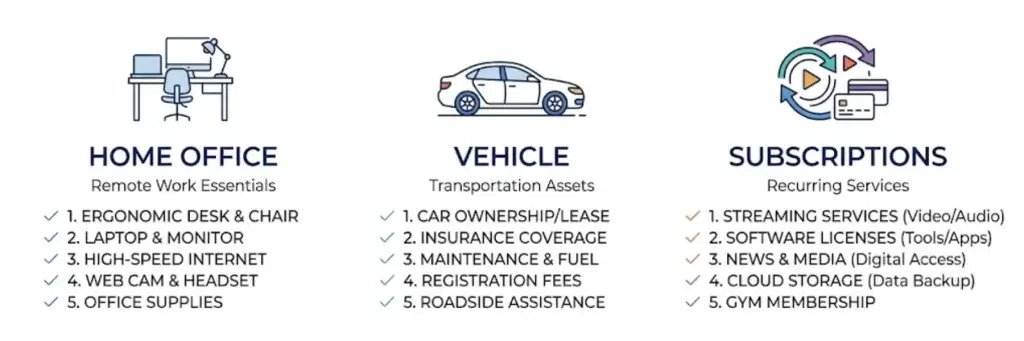
These are not off-limits. They are simply the ones where sloppy records cause trouble.
Motor vehicle. You have two methods. The cents per kilometre method is 88 cents per kilometre for 2025-26, capped at 5,000 business kilometres, so the most you can claim this way is $4,400 per car. It rises to 91 cents for 2026-27, worth noting for the year that has just started. You do not need a logbook, but you do need a reasonable basis for your kilometres. If you drive more than 5,000 business kilometres, the logbook method almost always beats it, and that means keeping a genuine 12-week logbook, which then stays valid for five years if your pattern of use does not change.
Working from home versus a home-based business. If your home is your principal place of business, different and more generous rules can apply, but so do capital gains implications on sale. Do not casually upgrade a work-from-home claim into a business-premises claim without advice.
Travel dressed up as work. The daily trip between home and a regular workplace is private, not deductible. Client visits, trips between job sites, and travel to pick up supplies generally do count. A sparky driving between jobs across Point Cook and Werribee is claiming business kilometres. The same person driving the kids to school is not. If you are on the tools, our notes for tax accountants for tradies dig into the vehicle and equipment claims that matter most in your trade.
The theme across all three: keep the private portion out, and keep evidence of the business portion in.
PAYG instalments: quarterly payments versus a single bill
Here is the surprise that catches sole traders in their second profitable year. Once you lodge a return that pushes you over the entry points, the ATO moves you onto quarterly PAYG instalments, effectively prepaying next year’s tax in four hits.
You are automatically brought in as an individual or sole trader when all of these are true on your latest return and assessment: instalment income of $4,000 or more, tax payable of $1,000 or more, and notional tax of $500 or more. The logic is reasonable. The ATO does not want you to owe a full year of tax in one lump, and honestly, neither do you.
The practical fix is to set money aside as you earn it. A rough working guide many sole traders use is to park 25% to 30% of each payment in a separate account for tax and super. That is a guideline to help with cash flow, not personal advice, and your right figure depends on your income and deductions. It is one of the habits we cover in our tax tips for new business owners, and it saves a lot of second-year stress. One more thing worth knowing: from 1 July 2025, ATO interest charges on late tax debt are no longer tax deductible, so carrying a balance is now more expensive than it used to be.
Five things to do before 31 October

Your 2025-26 sole trader tax return is due by 31 October 2026 if you lodge it yourself. Work through these first.
- Reconcile your income correctly. Match invoice dates and payment dates properly, and make sure every platform and bank deposit is accounted for. Missed income is the fastest way to trigger a review.
- Check your logbook is current. If you are using the logbook method, it needs to cover a minimum 12-week period and reflect how you actually drive now.
- Separate your super from your expenses. Record personal super contributions distinctly, and confirm your notice of intent is lodged and acknowledged before you claim the deduction.
- Get a professional review if your income jumped. A significant change in earnings is exactly when a second set of expert eyes pays off, both for deductions and for planning your instalments.
- Keep receipts for everything. The ATO can generally ask you to substantiate deductions going back five years. Digital copies are fine. A clear photo of a receipt beats a vague memory every time.
When a tax agent pays for itself
There is a reason most sole traders eventually stop doing this alone. A good agent usually finds deductions you would have missed, and the fee itself is deductible. Beyond the numbers, they change your risk position: returns prepared through a registered tax agent are viewed differently, queries are easier to resolve, and you gain breathing room, because lodging through an agent generally extends your deadline well beyond 31 October.
It is not really about the refund on one return. It is about getting your business structure, your instalments and your record-keeping working together so every year is calmer than the last. That is the everyday work of the team at MaxMargin Accountants. If you want to see the difference an agent makes in practice, their piece on how a Melbourne tax accountant maximises your refund is a good place to start.
Ready to keep more of what you earn?
If last year’s return left you second-guessing, this is the year to fix it properly. Book a consultation with a tax accountant in Melbourne or your local tax agent at MaxMargin, and lodge your next return knowing every claim is one you can stand behind.